
UAE Labour Law 2026 | Rules & Employee Rights Explained
Do you really know your rights under the UAE Labour Law? Most employees do not, and that gap is exactly where people lose money or accept unfair terms. The law shapes your job more than you might think, because it sets your working hours, your leave, your salary rules, and what you receive when your job ends. When you understand it, no employer can take advantage of you.
The UAE Labour Law was updated under Federal Decree-Law No. 33 of 2021, and it now runs every private-sector workplace across the Emirates. This guide breaks down the 2026 rules in plain language, covering contracts, working hours, all your leave types, pay and the WPS, termination, gratuity, and the protections that keep your workplace fair. Read it once, and you will walk into any job, resignation, or dispute knowing exactly where you stand.
What is the new UAE Labour Law?
The UAE Labour Law is the official rulebook for employers and workers in the private sector, setting the rights and duties on both sides so every workplace runs on fair terms. Think of it as the agreement that protects you and your employer at the same time.
The current version comes from Federal Decree-Law No. 33 of 2021, which took effect in February 2022 and replaced the older 1980 law. It modernised the rules with fixed-term contracts, clearer leave, stronger protection for women, and an unemployment insurance scheme. MOHRE, the Ministry of Human Resources and Emiratisation, enforces these rules and steps in when disputes arise. Note that this law covers the private sector and most free zones, while a few zones like the DIFC and ADGM follow their own employment rules.
Key Changes in the 2026 UAE Labour Law
The 2026 law brought several big changes that affect how you work, resign, and get paid. Here are the three that matter most to everyday employees.
Fixed-Term Contracts (No More Unlimited Contracts)
The biggest change removed unlimited contracts completely. Now every private-sector employee works on a fixed-term contract, which runs for a set period and can be renewed. Companies had until February 2023 to move all their staff from the old unlimited contracts to these new agreements. This matters because the old rules that reduced your gratuity for resigning early no longer apply, so you keep your full end-of-service benefits either way.
Flexible Work Week and Working Hours
The standard limit stays at 8 hours a day, or 48 hours a week. What changed is flexibility. Your employer can now set any day as your weekly rest day in your contract, so it does not have to fall on a Friday. If you work beyond your normal hours, the law gives you clear overtime pay rules, so you receive extra for the extra time you put in.
Notice Period Rules
When you or your employer end a contract, both sides must give written notice. The notice period is set in your contract, and it must fall between 30 and 90 days. This replaced the old system, where your notice depended on your years of service. So today, your contract decides your notice, not a fixed service-based table.
Things to Know About UAE Labour Law
The 2026 law touches almost every part of your working life, from your contract to your final paycheck. Here are the key points every employee should know.

Fixed-Term Contracts
The law removed unlimited contracts completely. Every private-sector worker now holds a fixed-term contract that runs for a set period and can be renewed. Companies had until February 2023 to move all staff onto these agreements. This change also protects your gratuity, because the old rule that cut your end-of-service pay for resigning early no longer applies.
Notice Periods and Probation
Your probation period can last up to six months. If your employer ends your job during probation, they must give you 14 days’ written notice. If you want to leave the country during probation, you give 14 days’ notice, and if you move to another UAE employer, you give 30 days’ notice. After probation, either side ends the contract with written notice set in your contract, which must fall between 30 and 90 days.
Flexible Working Hours
The standard limit is 8 hours a day or 48 hours a week, and it drops by 2 hours a day during Ramadan. The law now lets your employer set any day as your weekly rest day in your contract, so it no longer has to be Friday. You also get at least a one-hour break after five hours of continuous work.
Overtime Pay
If you work beyond your normal hours, UAE labour law overtime rules pay you extra on your basic wage. You earn your normal hourly rate plus at least 25% for daytime overtime, and plus at least 50% for overtime between 10 pm and 4 am. Overtime cannot pass 2 hours a day, and your total hours must stay within 144 hours over any three weeks. You can see the full rates and worked examples in our overtime calculation guide. The law counts overtime on your basic salary only, not your allowances.
Annual Leave
Once you complete one year, you earn 30 days of paid annual leave each year. If you have worked more than six months but less than a year, you earn 2 days for each month. Use your leave within the year, though you can agree with your employer to carry it over or cash it out. When your job ends, your employer pays any unused leave based on your basic salary, and you can work this out with our leave salary calculator.
Sick Leave
Sick leave as per UAE labour law gives you up to 90 days per year after your probation ends. The pay comes in three tiers: full pay for the first 15 days, half pay for the next 30 days, and no pay for the final 45 days. You must tell your employer within three working days and give a medical report. Your employer cannot dismiss you simply for taking sick leave you are entitled to.
Maternity Leave
Maternity leave under UAE labour law gives mothers in the private sector 60 days: 45 days at full pay, followed by 15 days at half pay. If a medical condition linked to the pregnancy or birth keeps you from working, you can take up to 45 more days of unpaid leave with a medical report. Your employer cannot dismiss you because of pregnancy or maternity leave.
Leave for Mothers of Children of Determination
If your baby is born ill or with a disability that needs constant care, you get extra support. On top of your maternity leave, you receive 30 more days at full pay, and you can then take another 30 days unpaid, backed by a medical report.
Parental (Paternity) Leave
The UAE was the first Arab country to give private-sector parental leave. Both mothers and fathers get 5 working days of paid parental leave after their child is born. You can take these days together or split them, but you must use them within the first six months.
Hajj and Umrah Leave
The law respects your religious duties. You can take up to 30 days of unpaid leave to perform Hajj, and you can use this benefit once during your service with one employer. Umrah leave is different, because the law does not require your employer to grant it. Many companies still allow it, either as unpaid leave or as part of your annual leave, based on their own policy.
Study Leave
If you study while you work, the law supports you. You can take 10 days of study leave a year, as long as you have at least two years of service and you study at an institution accredited in the UAE. Your employer may grant this leave as paid or unpaid, depending on company policy.
Job-Hunting Leave
While you serve your notice period, you have the right to one day of unpaid leave each week to look for a new job. This lets you attend interviews without spending your annual leave. Plan the day with your employer so it fits the work schedule.
Bereavement Leave
The law gives you paid time off when you lose a close family member. You get 5 days of paid leave if your spouse passes away, and 3 days if you lose a parent, child, sibling, grandparent, or grandchild. This leave lets you grieve and handle family matters without risking your job.
Termination Rules
Contract termination now follows a clearer path under Federal Decree-Law No. 33 of 2021, the current UAE Labour Law. Either you or your employer can end the contract by giving written notice, and the length sits in your contract within the 30 to 90 day range. The old system, where your notice depended on your years of service, no longer applies. So your contract sets your notice today, not a fixed service-based table.
Contract Suspension Rules
Your employer can suspend you for up to 30 days while they investigate a serious issue, such as a safety breach, a major financial loss, or leaking company secrets. During the suspension, you receive half of your pay. If the investigation clears you, your employer must pay back the other half for that period.
End-of-Service Gratuity
Gratuity is the reward you earn for your service, and you qualify after one full year. The law calculates it on your last basic salary: 21 days of pay for each of your first five years, and 30 days for each year after five. Your employer must pay your full settlement, including gratuity, within 14 days of your last day. You can work out your exact figure with our gratuity calculator in seconds.
Salary Currency Rules
Under the old law, employers paid salaries only in UAE dirhams. The new law adds flexibility, so your employer can pay you in another currency, such as dollars or rupees, if you both agree in the contract. In practice, most companies pay through the Wages Protection System (WPS), which effectively means dirhams.
The Main Legal Protections Under UAE Labour Law
Beyond pay and leave, the UAE labour law builds strong protections into every workplace. These rules guard your dignity, your equal treatment, and your safety on the job.
Equal Opportunity and Equal Pay
The law bans discrimination based on race, colour, sex, religion, national origin, or disability. No employer can treat you unfairly in hiring, pay, or promotion because of who you are. On top of this, the law gives women and men equal pay for the same work, so two people doing the same job earn the same wage regardless of gender.
Protection for Women
UAE labour law gives female employees clear protection at work. An employer cannot dismiss a woman, or even threaten to, because she is pregnant or on maternity leave. The law also protects women from unfair treatment linked to childbirth, and it backs their right to return to the same role afterwards.
Protection from Harassment and Abuse
Your employer must keep the workplace free from harm. The law holds employers responsible for protecting you against verbal, physical, and psychological abuse, along with harassment and bullying at work. If you face any of this, you can raise a complaint with MOHRE, which can step in and investigate.
Disciplinary Rules
Employers can apply disciplinary action, but only within clear legal limits. Under Article 44 of Federal Decree-Law No. 33 of 2021, the law sets out the specific serious cases where an employer may dismiss a worker without notice, such as fraud or a major safety breach. Even then, the employer must follow a proper process and document the reason, so no one loses their job on an unfair or sudden decision.
The Unemployment Insurance Program (ILOE)
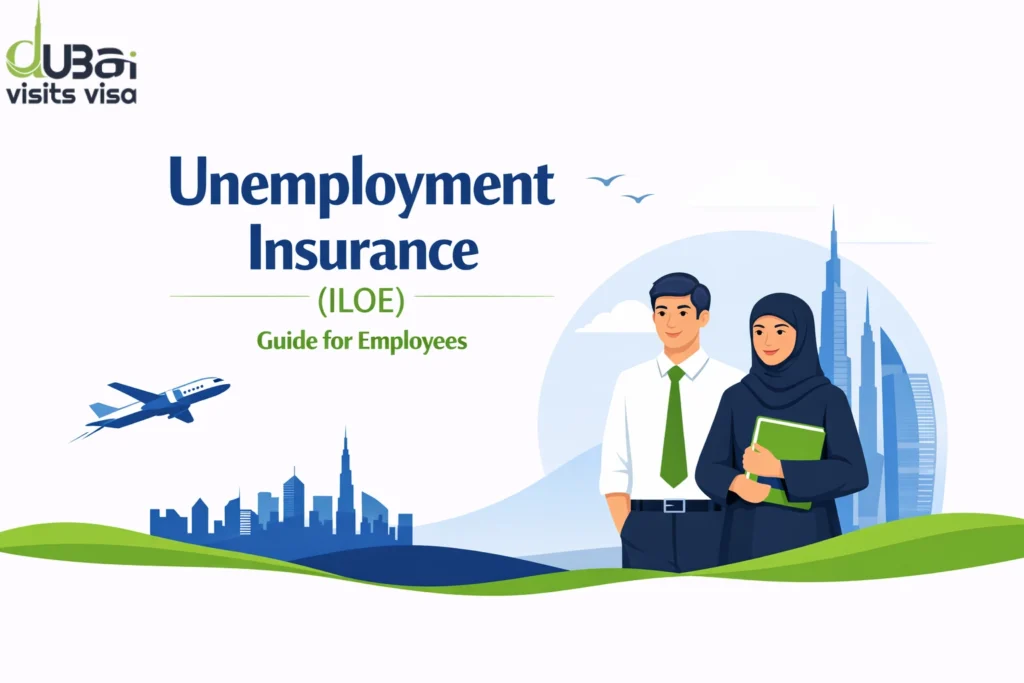
The UAE runs an unemployment insurance scheme that gives you a financial cushion if you lose your job through no fault of your own. It works under a separate law, Federal Decree-Law No. 13 of 2022, which sits alongside the main UAE labour law and took effect in January 2023.
Here is how it works. You pay a small premium to join the scheme, and in return you receive a monthly cash payout if your employer terminates you. The payout equals 60% of your basic salary, and it runs for up to three months per claim, or until you find a new job, whichever comes first.
The amount you can receive depends on your basic salary:
A few conditions apply. You must have paid your premiums for at least 12 straight months before you claim, and you must file your claim within 30 days of losing your job. The scheme does not cover everyone: investors, domestic workers, retirees on a pension, and workers under 18 cannot join. You register and pay through the ILOE platform, not your employer, so the responsibility to stay covered sits with you.
UAE public holidays
UAE labour law gives every private-sector worker fully paid time off on official public holidays. These days let you rest and spend time with family during national and religious occasions. The exact dates of the Islamic holidays shift each year, because they follow the moon-based Hijri calendar, so the government confirms them closer to the time.
Here are the public holidays and the paid days you get for each:
Holiday Name | Paid Days |
Gregorian New Year | 1 day (January 1) |
Eid Al Fitr | 3 to 4 days |
Arafat Day & Eid Al Adha | 4 Days |
Islamic New Year (Hijri) | 1 Days |
Prophet Mohammed’s Birthday | 1 Days |
Commemoration Day | 1 day (1 December) |
National Day | 2 days (2 to 3 December) |
If a holiday falls on your weekly rest day, or if your work requires you to come in, the law protects you. You either get a substitute day off or extra pay for working the holiday.
UAE Salary Rules
Your salary is your right, and UAE labour law sets clear rules so your employer pays you the correct amount, on time, every month. Your employment contract must state your exact salary, and your employer must stick to it.
When Your Salary Is Due
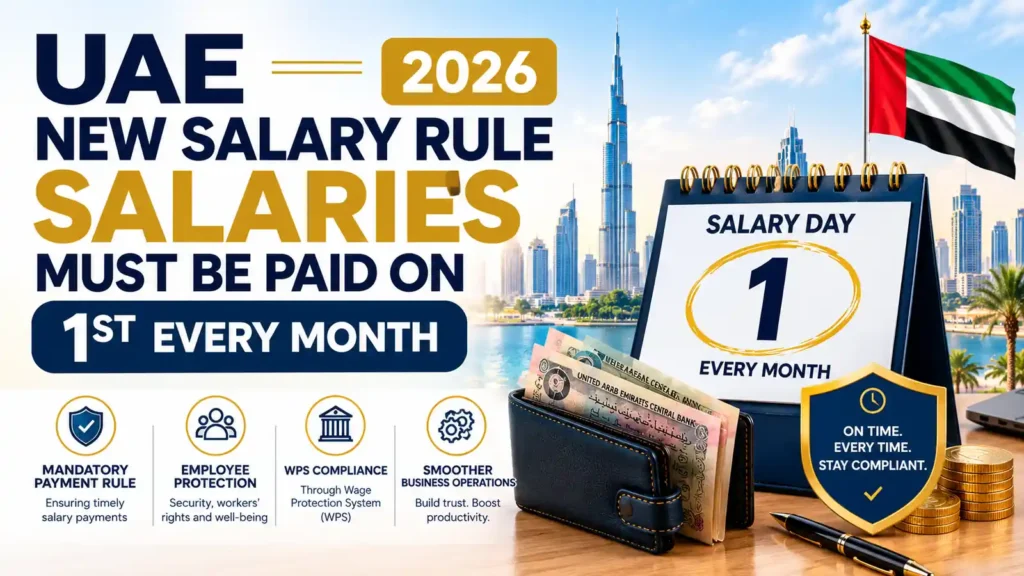
Your salary falls due on the first day of the month after you finish the work period, unless your contract sets a different date. If your employer pays late, they break the law and can face fines. Timely pay is not a favour; it is a legal duty.
Source of payment
Almost every private business must pay staff through the Wages Protection System (WPS). This is a secure electronic system that sends your salary straight to your bank account through an approved bank. It creates a clear record of every payment, so your employer cannot claim to have paid you when they have not.
How the WPS Protects You
The WPS matters because it keeps your pay transparent and traceable. MOHRE monitors these transfers, and businesses that skip the WPS risk heavy fines and penalties. For you, this means a documented trail of your wages, which becomes strong proof if a salary dispute ever reaches MOHRE.
UAE labour law introduces two new benefits for employees
The updated law added protections that make your job in the UAE more secure. Two of them stand out, because they guard your health and your money.

Mandatory Health Insurance
Your employer must give you at least basic health insurance coverage. Here is what the law says about it:
- Dubai and Abu Dhabi have required health insurance for years, and the rule is now expanding across the other Emirates too.
- Your employer must cover the cost of your insurance premium.
- Your employer cannot deduct this cost from your paycheck or lower your pay to cover it.
- The law requires coverage for you, the employee, but it does not always require your employer to cover your family or dependents.
- So always read your policy to see exactly who and what it covers.
Protection of Your End-of-Service Dues
The law also protects the money you are owed when your job ends. Your employer must secure your dues, such as your gratuity and unpaid wages, through an approved system, so you still get paid even if the company runs into financial trouble. This means your hard-earned end-of-service benefits do not disappear if your employer fails.
Employee Insurance System
The UAE has a system that protects your financial rights, especially the money you are owed when your job ends. When your employer hires you, the law makes them choose one of two options to guarantee your dues. Both options exist to make sure you get paid even if the company cannot pay.
Bank Guarantee
Your employer can place a bank guarantee of at least AED 3,000 for each worker, issued by a bank in the UAE. This money sits aside as security, and MOHRE can release it to cover your dues if your employer fails to pay you.
Insurance Policy (Taa-meen)
Instead of the bank guarantee, your employer can buy a low-cost insurance policy on your behalf, known as Taa-meen. This policy is cheaper for the employer but still protects you well, with coverage up to AED 20,000. It can pay out for things like unpaid wages, your end-of-service gratuity, a return air ticket, and work injuries. If the insurer pays you, your employer must repay that amount, so the responsibility still rests with them.
Conclusion
The new UAE Labour Law is a big step toward a modern, fair, and simpler job market for everyone. By setting clear rules on everything from contracts and leave to pay and workplace safety, it balances the interests of employers and employees alike. Once you understand these basics, you can spot an unfair term long before it costs you, hold your employer to what the law promises, and raise a complaint with MOHRE when you need to.
I wrote this guide as a legal consultant to explain the law in plain language, so you can feel safe and secure in your job in the UAE.